


M.Sc Perfusion Technology
- Home
- Allied Health/Paramedical
- MSc PT
Course Overview
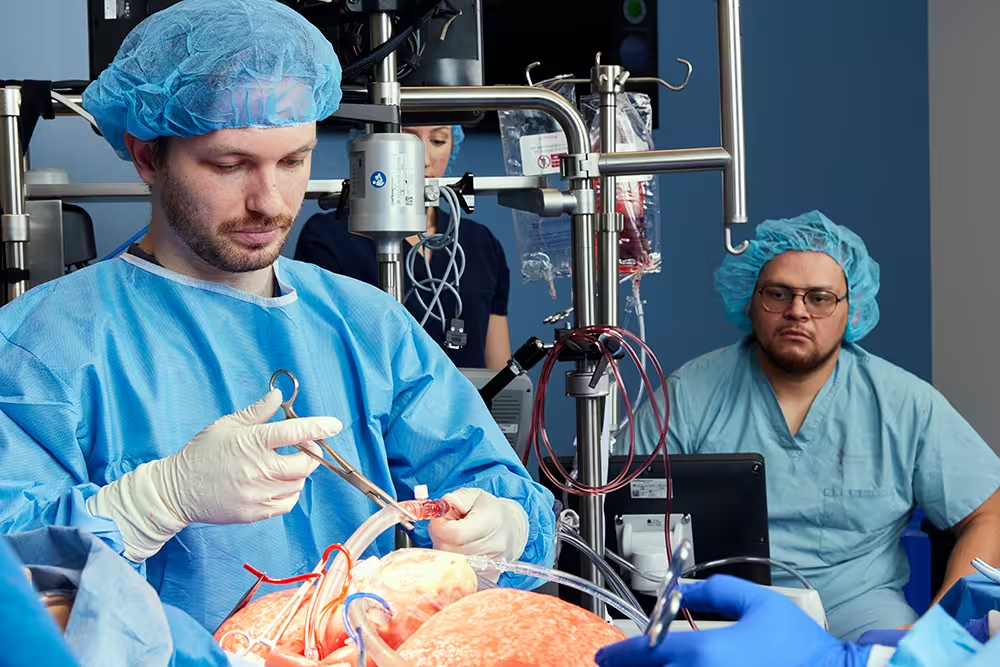
The M.Sc Perfusion Technology is a postgraduate programme focused on advanced cardiac care and life-support techniques used during heart surgeries. The course prepares students to operate the heart-lung machine, which temporarily takes over the function of the heart and lungs during complex surgical procedures. It combines clinical knowledge with critical care and surgical support training.
This specialisation plays a vital role in cardiac surgery. Through structured clinical exposure, learners develop the ability to manage life-support systems, monitor patient parameters, and assist surgical teams in high-risk environments such as operation theatres and intensive care units.
*This specialisation may be offered as a standalone programme or as part of an M.Sc Allied Health / Cardiac Technology programme, depending on the institution.
Course Overview
The M.Sc Perfusion Technology is a postgraduate programme focused on advanced cardiac care and life-support techniques used during heart surgeries. The course prepares students to operate the heart-lung machine, which temporarily takes over the function of the heart and lungs during complex surgical procedures. It combines clinical knowledge with critical care and surgical support training.
This specialisation plays a vital role in cardiac surgery. Through structured clinical exposure, learners develop the ability to manage life-support systems, monitor patient parameters, and assist surgical teams in high-risk environments such as operation theatres and intensive care units.
*This specialisation may be offered as a standalone programme or as part of an M.Sc Allied Health / Cardiac Technology programme, depending on the institution.
Who Should Consider This Course
This course may suit students who:
- Have a background in allied health or cardiac-related fields
- Are interested in critical care and surgical environments
- Can work under pressure and handle high-responsibility roles
- Prefer hospital-based, high-skill clinical work
- Want to be part of surgical teams
It may not be suitable for students looking for low-pressure or non-clinical roles.
Course Highlights
- Duration: 2 years
- Degree Awarded: M.Sc Perfusion Technology (or equivalent specialisation-based degree)
- Study Mode: Full-time
- Exposure: Hospitals, cardiac surgery units, ICUs
Eligibility Criteria
Academic Requirements:
- Bachelor’s degree in a relevant field such as:
- B.Sc Perfusion Technology
- B.Sc Cardiac Care Technology
- B.Sc Allied Health
- Minimum aggregate typically 50–55% or above
(may vary by institution and category)
Age Requirement:
- No specific upper age limit (varies by institution)
Entrance Exams & Admission Process
Admission may be based on:
- Merit (UG marks)
- University or state-level entrance exams
NEET is NOT required
Important Note:
Eligibility and admission criteria may vary depending on institution and regulations.
Subjects & Curriculum Overview
Students study subjects such as:
- Cardiovascular Physiology
- Perfusion Techniques
- Extracorporeal Circulation
- Cardiac Surgery Support
- Critical Care Monitoring
- Biomedical Equipment
The course includes intensive clinical training in operation theatres and cardiac units.
Skills & Competencies Developed
- Operation of heart-lung machine
- Monitoring vital parameters during surgery
- Critical care management
- Understanding surgical procedures
- Team coordination in high-risk environments
Career Opportunities & Work Settings
After completing M.Sc Perfusion Technology, graduates can work in:
- Hospitals
- Cardiac surgery units
- Intensive care units (ICUs)
- Specialised heart centres
Typical Job Roles
- Perfusionist
- Cardiac Perfusion Specialist
- Surgical Support Specialist
- Critical Care Technologist
Career progression depends on clinical exposure, experience, and specialisation.
Salary & Growth Outlook
Earnings depend on:
- Type of hospital (private / specialised cardiac centre)
- Experience
- Location
This field offers high responsibility roles with strong career growth, especially in specialised hospitals.
Salary varies and no specific outcomes are guaranteed.
Higher Studies & Progression
After M.Sc Perfusion Technology, students may consider:
- Advanced certifications in cardiac care
- Specialisation in critical care
- Academic and teaching roles
FAQs (Frequently Asked Questions)
What is M.Sc Perfusion Technology?
It is a postgraduate course focused on operating life-support systems during cardiac surgery.
Is NEET required for this course?
No. NEET is not required.
What does a perfusionist do?
They operate the heart-lung machine and monitor patients during surgery.
Is this a good career option?
Yes, especially for students interested in high-skill, hospital-based roles in cardiac care.
Why Career Build Consultancy (CBC) for M.Sc Perfusion Technology guidance
- Guidance on cardiac specialisations
- Help in choosing the right college
- Admission support and counselling
- Career planning assistance
Take the Next Step
If you are considering a career in operation theatre and surgical support services, speak with a CBC career expert to understand whether M.Sc Perfusion Technology aligns with your goals and circumstances.