M.Sc Medical Imaging Technology
- Home
- Allied Health/Paramedical
- MSc MIT
Course Overview
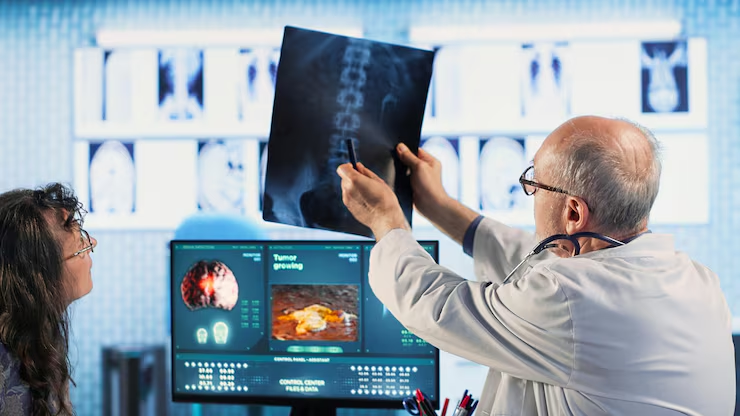
The M.Sc Medical Imaging Technology is a postgraduate programme focused on advanced diagnostic imaging techniques such as MRI, CT scan, X-ray, and ultrasound. The course prepares students to operate imaging equipment, capture diagnostic images, and assist doctors in identifying medical conditions. It combines technical knowledge with clinical applications in hospital settings.
This specialisation plays a key role in modern diagnostics. Through structured laboratory training, learners develop the ability to perform advanced tests, interpret results, and support doctors in clinical decision-making.
*This specialisation may be offered as a standalone programme or as part of an M.Sc Allied Health / Medical Imaging programme, depending on the institution.
Course Overview
The M.Sc Medical Imaging Technology is a postgraduate programme focused on advanced diagnostic imaging techniques such as MRI, CT scan, X-ray, and ultrasound. The course prepares students to operate imaging equipment, capture diagnostic images, and assist doctors in identifying medical conditions. It combines technical knowledge with clinical applications in hospital settings.
This specialisation plays a key role in modern diagnosis. Through structured clinical and technical training, learners develop the ability to handle imaging systems, ensure accurate imaging procedures, and support medical decision-making.
*This specialisation may be offered as a standalone programme or as part of an M.Sc Allied Health / Medical Imaging programme, depending on the institution.
Who Should Consider This Course
This course may suit students who:
- Have a background in allied health or life sciences
- Are interested in medical technology and machines
- Prefer technical and hospital-based roles
- Want to work closely with diagnostic equipment
- Are comfortable working in clinical environments
It may not be suitable for students looking for purely research or lab-based roles.
Course Highlights
- Duration: 2 years
- Degree Awarded: M.Sc Medical Imaging Technology (or equivalent specialisation-based degree)
- Study Mode: Full-time
- Exposure: Hospitals, radiology departments, diagnostic centres
Eligibility Criteria
Academic Requirements:
- Bachelor’s degree in a relevant field such as:
- B.Sc Medical Imaging Technology
- B.Sc Radiology / Allied Health
- B.Sc in Life Sciences (in some cases)
- Minimum aggregate typically 50–55% or above
(may vary by institution and category)
Age Requirement:
- No specific upper age limit (varies by institution)
Entrance Exams & Admission Process
Admission may be based on:
- Merit (UG marks)
- University or state-level entrance exams
NEET is NOT required
Important Note:
Eligibility and admission criteria may vary depending on institution and regulations.
Subjects & Curriculum Overview
Students study subjects such as:
- Radiographic Techniques
- MRI & CT Imaging
- Ultrasound Imaging
- Radiation Physics
- Image Processing
- Advanced Diagnostic Imaging
The course includes extensive hands-on training with imaging equipment.
Skills & Competencies Developed
- Operation of imaging equipment (MRI, CT, X-ray)
- Image analysis and quality control
- Patient positioning and safety
- Understanding diagnostic procedures
- Technical and clinical coordination
Career Opportunities & Work Settings
After completing M.Sc Medical Imaging Technology, graduates can work in:
- Hospitals
- Diagnostic imaging centres
- Radiology departments
- Healthcare institutions
Typical Job Roles
- Radiology Technologist
- Imaging Specialist
- MRI / CT Technologist
- Diagnostic Imaging Professional
Career progression depends on clinical exposure, experience, and specialisation.
Salary & Growth Outlook
Earnings depend on:
- Type of organisation (hospital, diagnostic centre)
- Experience
- Location
This field offers strong demand and stable career growth, especially with advanced imaging skills.
Salary varies and no specific outcomes are guaranteed.
Higher Studies & Progression
After M.Sc Medical Imaging Technology, students may consider:
- Advanced certifications in imaging
- Specialisation in specific imaging modalities
- Academic and teaching roles
FAQs (Frequently Asked Questions)
What is M.Sc Medical Imaging Technology?
It is a postgraduate course focused on diagnostic imaging using advanced medical equipment.
Is NEET required for this course?
No. NEET is not required.
What is the difference between imaging and lab courses?
Imaging involves machines like MRI and CT scans, while lab courses involve sample testing and analysis.
Is this a good career option?
Yes, it offers strong demand and opportunities in hospitals and diagnostic centres.
Why Career Build Consultancy (CBC) for M.Sc Medical Imaging guidance
- Guidance on specialisation selection
- Help in choosing the right college
- Admission support and counselling
- Career planning assistance
Take the Next Step
If you are considering a career in operation theatre and surgical support services, speak with a CBC career expert to understand whether M.Sc Medical Imaging Technology aligns with your goals and circumstances.