


MPT - Master of Physiotherapy
- Home
- Physiotherapy
- MPT
Course Overview
The MPT – Master of Physiotherapy is a postgraduate programme focused on advanced clinical training, specialisation, and expertise in physiotherapy and rehabilitation sciences. The course builds on foundational knowledge from BPT and prepares students to handle complex cases, specialise in specific areas, and take on advanced clinical or academic roles.
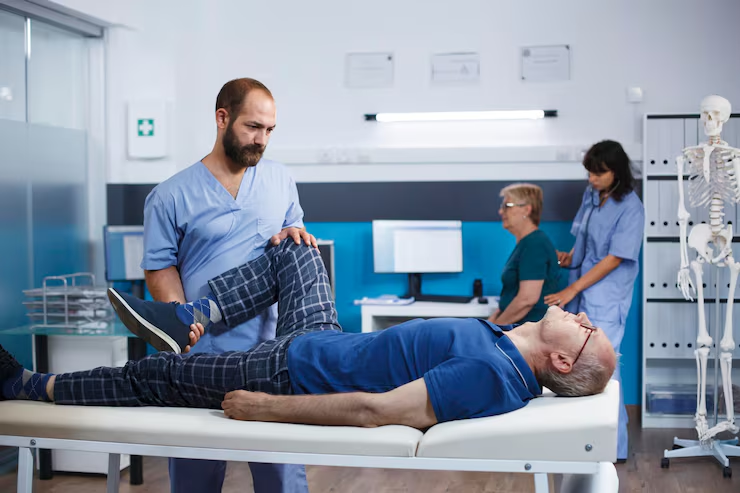
This role supports advanced rehabilitation and specialised patient care in clinical settings. Through structured clinical exposure, learners develop the ability to assess complex conditions, design specialised treatment plans, and apply advanced physiotherapy techniques to improve patient outcomes.
Course Overview
The MPT – Master of Physiotherapy is a postgraduate programme focused on advanced clinical training, specialisation, and expertise in physiotherapy and rehabilitation sciences. The course builds on foundational knowledge from BPT and prepares students to handle complex cases, specialise in specific areas, and take on advanced clinical or academic roles.
This role supports advanced rehabilitation and specialised patient care in clinical settings. Through structured clinical exposure, learners develop the ability to assess complex conditions, design specialised treatment plans, and apply advanced physiotherapy techniques to improve patient outcomes.
Who Should Consider This Course
This course may suit students who:
- Have completed BPT and want to specialise
- Are interested in advanced clinical practice
- Want to work in specialised areas (sports, neuro, ortho)
- Are considering teaching or research roles
- Want better career growth and expertise
It may not be suitable for students looking for immediate entry into non-specialised roles.
Course Highlights
- Duration: 2 years
(as per institutional and regulatory norms) - Degree Awarded: Master of Physiotherapy (MPT)
- Study Mode: Full-time
- Clinical Exposure: Specialised departments, hospitals, rehabilitation centres
Eligibility Criteria
Academic Requirements:
- Bachelor of Physiotherapy (BPT) or equivalent degree
- Minimum aggregate typically 50–55%
(around 45% for reserved categories as per regulations)\
Internship Requirement:
- Completion of a mandatory 6-month internship as part of BPT
Additional Requirements:
- Degree must be from a recognised university
- Some institutions may require registration with State Physiotherapy Council
- Candidates must be medically fit
Entrance Exams & Admission Process:
Admission to MPT programmes may vary:
- Some colleges offer merit-based admission
- Others may conduct or consider:
- University-specific entrance exams
- State-level entrance tests
NEET is NOT required for MPT admission
Important Note:
Eligibility and admission criteria may vary depending on the institution and regulatory guidelines.
Specialisations in MPT
Students can choose from various specialisations such as:
- Orthopaedic Physiotherapy
- Neurological Physiotherapy
- Sports Physiotherapy
- Cardiopulmonary Physiotherapy
- Paediatric Physiotherapy
Specialisation plays a key role in career direction and expertise.
Skills & Competencies Developed
- Advanced patient assessment and diagnosis
- Specialised rehabilitation techniques
- Clinical decision-making and treatment planning
- Research and evidence-based practice
- Patient management and communication
Career Opportunities & Work Settings
After completing MPT – Master of Physiotherapy, graduates can work in:
- Multi-speciality hospitals
- Rehabilitation centres
- Sports organisations
- Physiotherapy clinics
- Academic institutions
Typical Job Roles
- Specialist Physiotherapist
- Senior Physiotherapist
- Sports Physiotherapist
- Rehabilitation Consultant
- Lecturer / Academic (with required qualifications)
Career growth improves with specialisation and clinical experience.
Salary & Growth Outlook
Earnings after MPT course depend on:
- Specialisation
- Experience
- Workplace (hospital, sports, private practice)
- Location
MPT graduates generally have better growth opportunities compared to BPT due to specialisation and advanced expertise.
Salary varies and no specific outcomes are guaranteed.
Higher Studies & Progression
After MPT course, students may consider:
- PhD in Physiotherapy or related fields
- Advanced certifications and fellowships
- Academic and research careers
FAQs (Frequently Asked Questions)
Is MPT necessary after BPT?
No, but it is recommended for specialisation and better career growth.
Does MPT require NEET?
No. NEET is not required for MPT admissions.
Is internship mandatory for MPT eligibility?
Yes, completion of BPT internship is usually required.
Can I specialise after BPT without MPT?
Limited. MPT provides structured specialisation and better career opportunities.
Why choose CBC for BPT guidance
- Guidance on MPT specialisations
- Help in choosing the right college
- Clarity on eligibility and admission process
- Support with applications and documentation
- Transparent, student-first counselling
Take the Next Step
Planning to Pursue an MPT Course? Speak with a CBC career expert to understand specialisations, eligibility, and admission options.